
Search Blog
Quick Inquiry
Chat on WhatsAppHot Products
About Us
Zhanjiang Group is a professional manufacturer of smart access control systems with 10+ years of experience, providing high-quality automatic gates, boom barriers for global industrial, commercial and residential projects.
Read More →

How to Choose the Right Parking Barrier Gate System
Choosing the right parking barrier gate system begins with understanding your site. A residential community, a shopping center, and an industrial park each have different requirements for vehicle access, traffic flow, and parking management.
As a manufacturer, we help customers turn those requirements into an equipment specification. The selection process should cover the complete entrance: the barrier, vehicle identification, detection devices, management software, and payment equipment where required.
This guide explains what to consider before ordering and what information to share with our team for a project-specific recommendation.
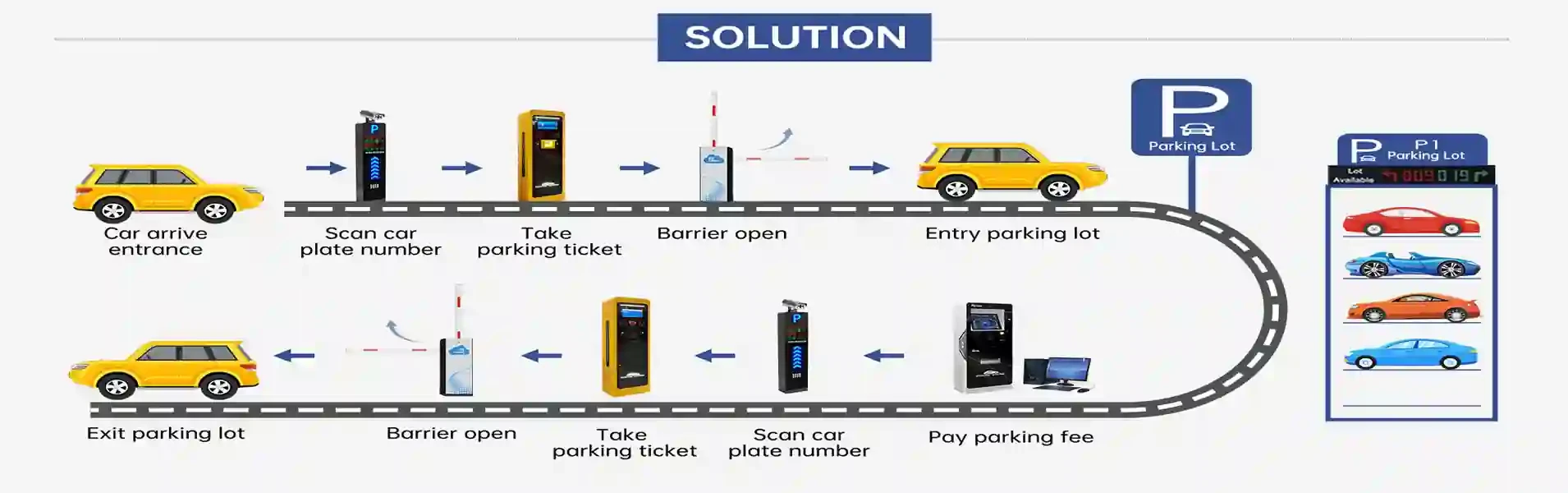
1. Start with Your Parking Management Requirements
First, define who will use the entrance and how access should be approved.
A residential community may need convenient entry for registered vehicles and temporary access for visitors. A commercial parking lot may require automatic fee calculation and payment verification. An industrial park may need different arrangements for employees, contractors, and delivery trucks.
Use the following questions to establish your priorities:
| Site type | Main questions to address |
|---|---|
| Residential community | How will residents, visitors, and delivery vehicles enter? |
| Office building | How will tenant permits and temporary visitor access be managed? |
| Shopping center | Where will drivers pay, and how will payment be checked before exit? |
| Industrial park | Can the entrance accommodate trucks and shift-change traffic? |
| Hotel | How will guest parking and public parking be distinguished? |
Also decide whether staff will be present. If the entrance will operate without an attendant, plan how drivers can request assistance when recognition, authorization, or payment fails.
Sharing these operating requirements with us helps establish which functions your system needs.
2. Measure the Entrance and Choose a Suitable Boom Type
Provide the supplier with the clear vehicle passage width, available installation space, and overhead clearance. Include photos showing the approach, exit, nearby walls, and pedestrian routes.
The barrier cabinet takes up space, so the overall entrance width is not necessarily the usable lane width. Confirm both dimensions on the proposed layout.
Consider the vehicles using the entrance as well. A lane serving delivery trucks may require a different approach and turning arrangement from one used mainly by passenger cars.
Compare boom configurations against these conditions:
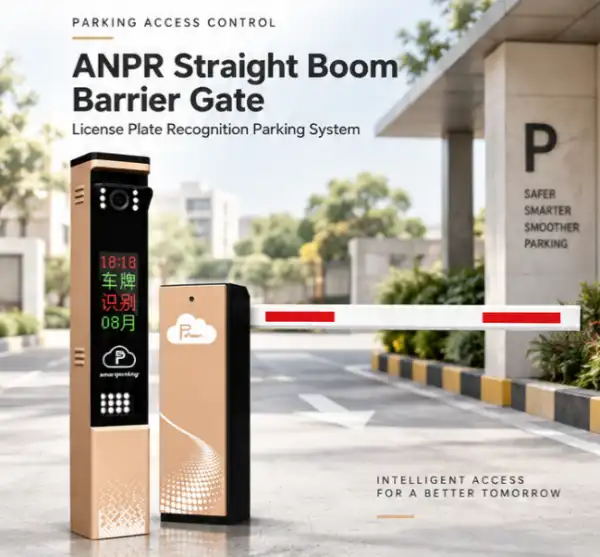
Straight boom barrier gate: Check the required arm length and the full opening clearance.
Folding boom: Consider this configuration where overhead space is restricted, subject to the supplier’s dimensional drawing.
Fence boom: Confirm the assembly’s operating clearance, wind limitations, and maintenance requirements.
You can explore Zhanjiang Smart Gate’s straight-bar and fence-style ANPR options on the barrier gate system product page.
3.Plan for Peak Traffic
Daily vehicle totals are useful, but the busiest arrival and departure periods are especially important when selecting a barrier.
For example, 300 vehicles distributed throughout the day create a different demand from 300 vehicles arriving around a shift change. Record peak traffic separately for each entrance and exit.
When reviewing a proposed configuration, consider:
Opening and closing time with the selected boom.
Rated operating duty.
Expected consecutive operations during busy periods.
Space available for queuing.
The time required for identification and authorization.
A vehicle’s passage involves more than the movement of the arm. Drivers may need to stop, wait for recognition, receive approval, or complete payment. Assess the full process before deciding that a faster barrier will solve a queue.
Your peak traffic estimates help us assess the equipment configuration alongside the access workflow.
Please prepare a specific proposal for a complete system.
- Variant A – 50 vehicles
- Variant B – 100 vehicles
- Variant C – 200 vehicles

4. Select the Right Vehicle Identification Method
The identification method should match your users and operating procedures.
ANPR for License Plate Identification
Automatic Number Plate Recognition uses a camera and software to read a vehicle’s registration number. The parking system then applies the relevant access or parking rules.
Before ordering, confirm support for your country’s plate formats with our team. Provide representative plate samples and discuss testing conditions, including night lighting, glare, camera angles, and different vehicle types.
Also agree on the procedure for an unreadable plate. Staff-assisted access or another approved fallback may be needed, depending on the project.
RFID for Registered Users
RFID is another option to evaluate where users can be issued tags or cards. Consider how credentials will be issued, replaced, and disabled, as well as how visitors will enter.
If your project requires RFID or a combination of identification methods, confirm reader, controller, and software compatibility during specification.
Choose the method that supports your daily operation and verify the required functions in the proposed configuration.
5. Design Payment and Exit as One Process
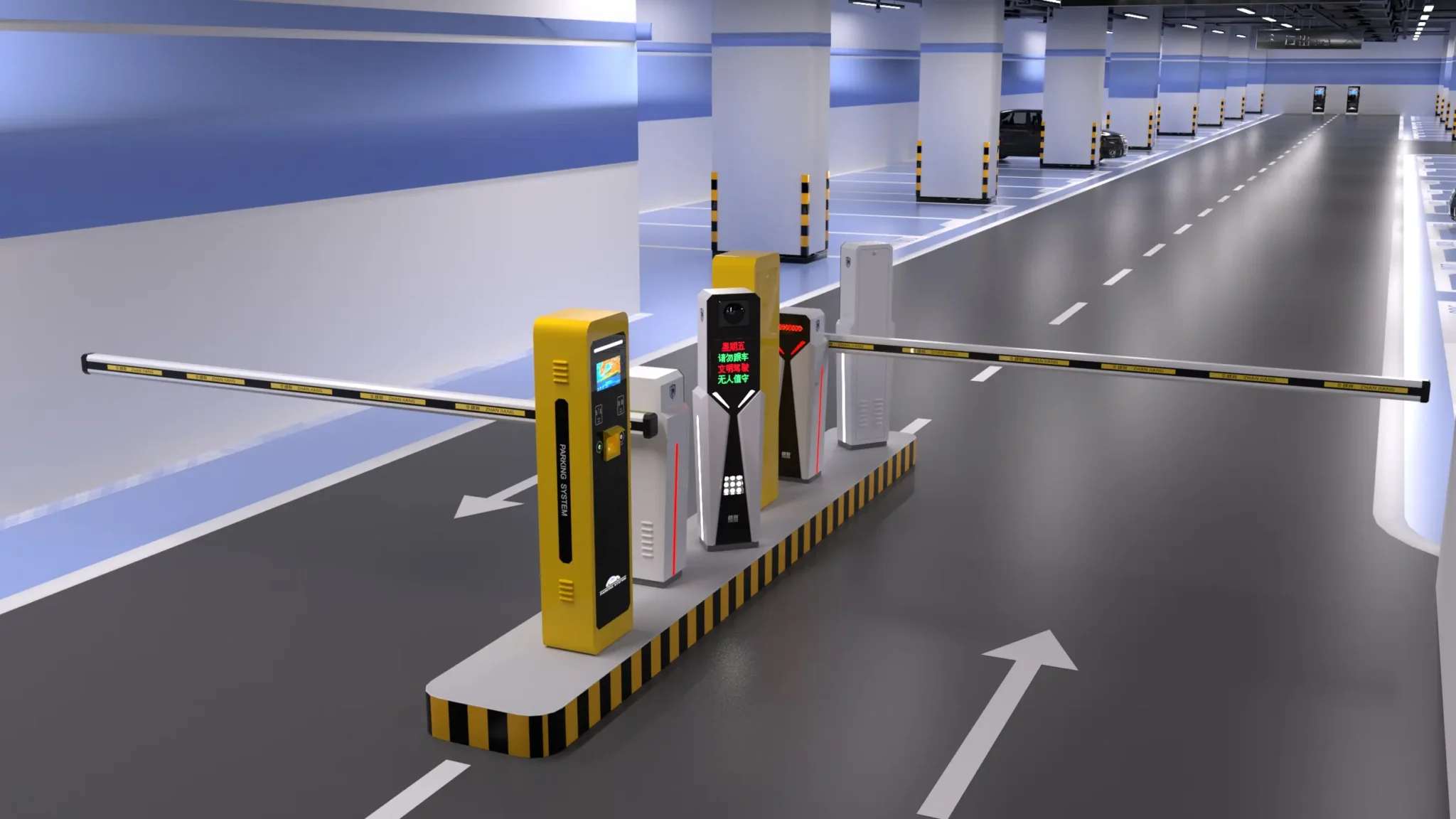
For paid parking, establish the charging and payment workflow before finalizing the equipment list.
Decide whether drivers will pay before returning to their vehicles or at the exit. Then define the rules the system must apply, including:
Free parking periods.
Hourly charges and daily limits.
Subscriptions or registered-user exemptions.
Discounts and validations.
The time allowed to exit after payment.
Failed-payment and unmatched-record procedures.
Local compatibility matters. Specify the required currency, payment methods, interface language, and receipt requirements. Confirm which integrations are available for your project and whether separate provider accounts or fees apply.
Our integrated parking solution outlines vehicle identification, parking guidance, and self-service payment functions. The final proposal should identify the functions, equipment, and regional integrations included in your configuration.
Before acceptance, test the complete journey from entry through payment to exit.
6. Confirm Vehicle Detection and Exception Handling
Vehicle detection should be planned together with the barrier and lane layout.
During configuration, establish which detection devices are required, where they will be positioned, and how their operation will be checked during commissioning. Include motorcycles and larger vehicles in the discussion if they regularly use the entrance.
Provide a separate, clearly defined route for pedestrians when planning the site.
The operating plan should also explain what happens during:
A power outage.
An internet or local network interruption.
A failed plate reading.
An authorization problem.
Authorized manual operation.
Emergency access.
Confirm the behavior available in your selected configuration rather than assuming every function continues during an outage. Include the agreed procedures in installation handover and staff training.
7. Review Site Conditions and Installation Responsibilities
Share the conditions in which the equipment will operate, including temperature, rain exposure, dust, drainage, and proximity to the coast.
These details should be checked against the selected equipment’s specifications. Also confirm the available power supply, network connection, and cable routes.
Before placing an order, establish the responsibilities of our team and your local installation contractor.
| Project task | What to confirm |
|---|---|
| Equipment supply | Models, quantities, accessories, and included documentation |
| Civil works | Foundations, mounting surfaces, islands, and drainage |
| Electrical work | Power supply, protection, and cabling |
| Network setup | Connectivity and required configuration |
| Commissioning | Who configures and tests the complete system |
| Training | Who provides operating instructions and staff handover |
8. Compare the Complete Project Cost
A useful budget covers the complete operating system.
When reviewing your quotation, check whether it includes:
Barrier cabinet and selected boom.
ANPR cameras or other identification equipment.
Vehicle detection devices.
Management software and licenses.
Payment equipment and integration.
Shipping and installation.
Commissioning and training.
Maintenance items and spare parts.
Keep one-time costs separate from recurring charges. Software subscriptions, payment fees, and service arrangements should be clear before ordering.
If you compare quotations, use the same equipment and service scope. This makes it easier to identify missing items and understand the cost of putting each proposal into operation.
Request a Parking Barrier Configuration for Your Site
9.What Are the Most Common Turnstile Buying Mistakes?
To help us review your project, prepare the following information:
Project country and site type.
Number of entrance and exit lanes.
Lane dimensions and overhead clearance.
Site photos or a layout drawing.
Vehicle types and peak traffic estimates.
Required identification methods.
Parking rules and payment requirements.
Available power and network connections.
Installation and support needs.
Explore our parking barrier gate systems to review product options, or visit our parking solution page to plan vehicle entry, payment, and exit together.
Share your site requirements with Zhanjiang Smart Gate to discuss a suitable configuration and request a project quotation.
If you need barrier gate solutions, installation drawings or free professional technical guidance for factory and large engineering projects, check our [Barrier Gate ] or contact us via WhatsApp:+8618927792680